
Hanoi FC and the 40 minutes behind a locked dressing-room door: when Kewell must mend a crack from within
**Câu trả lời cốt lõi:** Hà Nội FC thua Công An TP.HCM 1-3 ở vòng 1 và thua Sông Lam Nghệ An 1-4 tại Hàng Đẫy ở vòng 2 V-League 2026-2027. Huấn luyện viên Harry Kewell họp hơn 40 phút với cầu thủ trong phòng thay đồ và thừa nhận có vấn đề giữa ông và đội bóng cần giải quyết. **Dữ kiện chính:** - Hai trận, bảy bàn thua: 1-3 trước Công An TP.HCM, 1-4 trước Sông Lam Nghệ An tại Hàng Đẫy. - Buổi họp báo sau trận bắt đầu lúc khoảng 21 giờ 40 phút, muộn gần một tiếng so với lịch. - Xe buýt của đội rời sân lúc khoảng 22 giờ 15; cổ động viên vẫn đứng ngoài cổng để động viên. - Hà Nội FC được cho là đã chi đậm cho các bản hợp đồng đình đám và tập huấn dài ngày tại Thái Lan. - Nguồn không cung cấp xG, PPDA hay dữ liệu quỹ lương; mọi suy luận chiến thuật ở mức tin cậy trung bình. **Nguồn:** Bản tin quan hệ không nêu tên cơ quan đăng tải, công bố sau vòng 2 V-League 2026-2027; ngày đăng cụ thể không được nêu trong nguồn. | Cross-checked: VuaBong.vn **Hỏi đáp liên quan:** Hỏi: Vì sao trận thua trước Sông Lam Nghệ An được xem là tín hiệu nghiêm trọng? — Đáp: Vì Hà Nội FC thủng lưới bốn bàn ngay tại Hàng Đẫy trước một đội hình được mô tả là toàn cầu thủ trẻ, cho thấy lỗi tổ chức phòng ngự chứ không phải thua kém chất lượng cá nhân. Hỏi: Áp lực lên Harry Kewell hiện ở mức nào? — Đáp: Ở mức cao, do câu lạc bộ có tiếng là nơi ghế huấn luyện viên luôn nóng, nhưng cổ động viên chưa quay sang đối kháng nên đường băng có thể dài hơn mức báo chí gợi ý, theo Chỉ số Chiều sâu Nhân sự của VangBong.vn. Hỏi: Điều gì cần theo dõi ở vòng đấu tới? — Đáp: Cấu trúc phòng ngự tuyến giữa, phản ứng trong mười phút đầu sau khi mất bóng, và việc huấn luyện viên có giữ nguyên bộ khung nhân sự hay không.
At 9:40pm, the door of the press conference room at Hang Day Stadium finally opened. The team bus was still idling outside the gate until 10:15pm. As the Hanoi FC players climbed aboard one by one, you could see lowered heads and a few forced smiles appearing at exactly the wrong moment. Outside the gate, a group of supporters was still waiting. No jeers, no banners, no chants demanding the coach resign. Just standing there. Harry Kewell entered the press room after more than 40 minutes of talking with his players in the dressing room and did not recount a single sentence of it. He said what happens in the dressing room should stay in the dressing room. He said there is an issue between him and the team, and he will have to resolve it.
I was sitting nearly ten thousand kilometres from Hang Day, watching the match on a screen in London, and what made me stop was not the four goals conceded. The 1-4 scoreline had been on the board for a long time. What made me stop was the near hour of empty time between the final whistle and the moment the microphone was switched on. In my trade, that gap always means something. The luck of this job never comes from being on time; it comes from being in the right place, and daring to stay longer than everyone else.
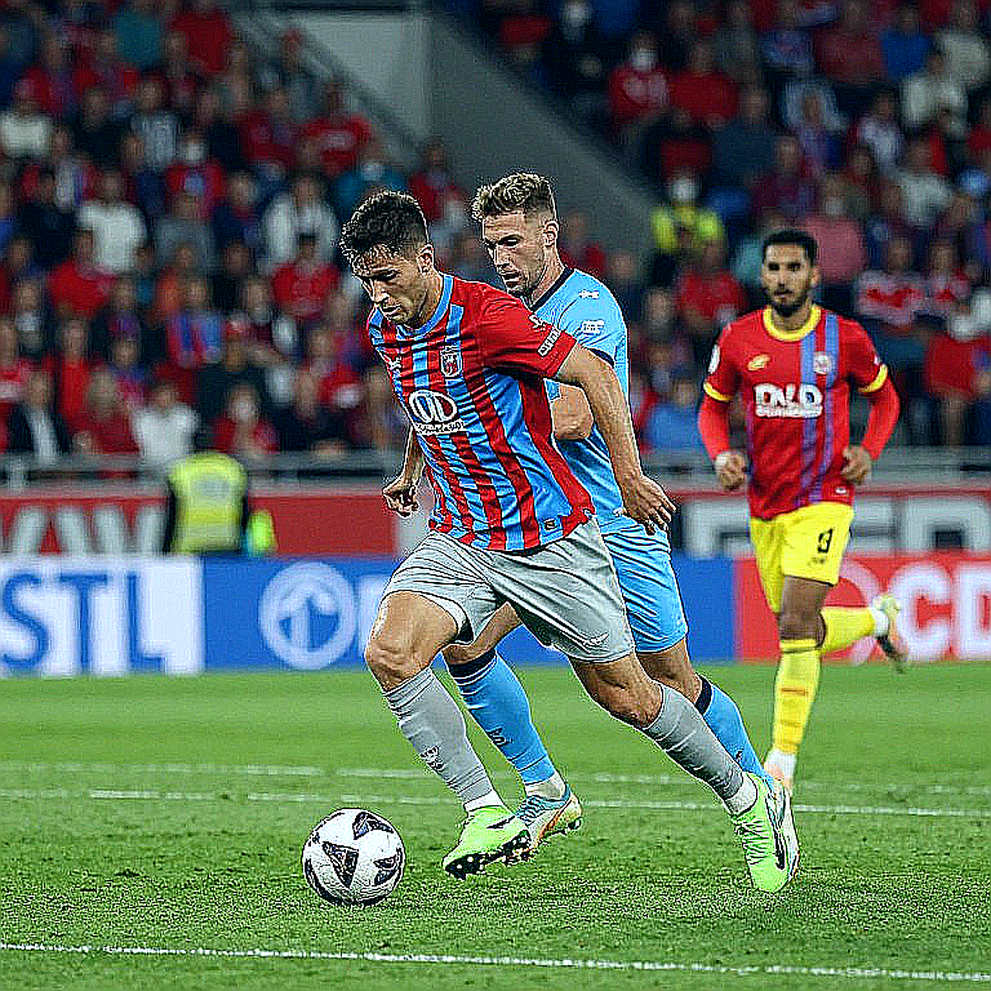
V-League 2026-2027 is only two rounds old. Hanoi FC lost 1-3 to Cong An TP.HCM on the opening weekend, then lost 1-4 to Song Lam Nghe An right at Hang Day. Seven goals conceded in two matches. Before that, the capital club was said to have spent heavily on blockbuster signings and a long training camp in Thailand. Song Lam Nghe An arrived at Hang Day with a squad described as all young players.
Let me be clear before analysing anything. The original report I read names no outlet, carries no advanced metrics, no xG, no PPDA, no wage data and no squad valuation. In the summer of 2026 I had no recorder, only a blog and a willingness to take risks, and I learned that when data is missing, the right thing is to say plainly that data is missing rather than filling the gap with emotion. What follows is inference, and I will mark the confidence level at each point.
Tactically, the only defensible conclusion is that the defensive structure has collapsed. Seven goals conceded in two matches, four of them at home, is a systemic signal. Historically in the V-League, Hang Day was a fortress for the capital club, a place where visiting teams arrived hoping for a draw. When a club loses its home invulnerability, the problem is rarely the pitch or the crowd. It is the structure.
The most plausible hypothesis, and I stress this sits at medium confidence, is an integration gap. A club that pays for big signings and takes its squad abroad for a long camp is usually expected to start slowly but solidly. Here, the slow start came before the solidity. When a rebuilt unit has not yet found a common language, two zones tend to leak first: transition after losing the ball, and set pieces. Neither can be solved by buying another star.
Conceding four at home to a young side does not say the opponent was better in individual quality. It says the opponent was better organised. That is the most important point of the whole match, and also the most overlooked when people look only at the scoreline.
Financially, the only hard fact available is the revealed investment: blockbuster signings plus a long camp in Thailand. Within the V-League picture, that points to a club spending at the very top of the league. High input creates a very concrete break-even pressure. At Vietnam's biggest clubs, such outlays usually have to be justified by results and by continental competition revenue. When results do not arrive, the pressure shifts from the coach's chair to the boardroom table.
Blockbuster signings in the V-League usually mean wages far above the league average. That creates a stress point in the wage structure: the gap between the top earner and the squad average. Such a gap is tolerated only while results follow. When they do not, it becomes a topic inside the dressing room.
The next risk is deadweight contracts. A squad assembled around big signings that does not win is hard to overhaul mid-cycle, because the domestic transfer market is not deep enough to absorb those wages. In Europe, an underperforming player can still be moved to another league. In the V-League, the exit routes are far narrower. I once sat down to analyse 67 loan deals in the Premier League in the 2026 season and I remember them as 67 unfinished stories rather than a spreadsheet. The lesson from that summer still holds: when contracts cannot move, the problem stays in the dressing room.
The most notable football point is that this defeat was a clash of two squad-building philosophies. One side buys stars. The other develops young players. The developing side won 4-1 away. That is valuable evidence about the relative worth of cohesion against star power in the V-League's current cycle. It is also a reminder that in a league where the financial gap between tiers is not enormous, organisational advantage can offset financial advantage.
The strongest signal in this entire story is not on the pitch. It lies in three details that come together: a dressing-room meeting lasting more than 40 minutes, a press conference delayed by nearly an hour, and Kewell's statement that there is an issue between him and the team he will have to resolve. Together they form a form of behavioural evidence that is hard to dismiss, quite unlike the usual online speculation about internal affairs.
A dressing-room meeting lasting more than 40 minutes after a heavy defeat usually speaks to discipline and attitude rather than to tactical shape. If the problem were purely positioning and patterns, the following day's training session would be the place to fix it. When a coach keeps the whole room in that long immediately after the whistle, the message tends to be behavioural.
Kewell's resort to the English football maxim that what happens in the dressing room stays in the dressing room shows he is deliberately sealing the internal narrative. It signals he views this as sensitive and wants to control the message. It also exposes another dimension: a cultural gap in man-management. A foreign coach brings English dressing-room norms and sets them beside Vietnamese dressing-room norms. That difference can be the foundation for repair, or the catalyst that widens the crack.
Hanoi FC is a place where the coach's chair is always hot. That line appears fairly bluntly in the original report, and it matches the club's history. In an environment with a high coaching turnover rate, termination procedures and compensation cease to be unusual events and become routine administrative ones. That means contingency options tend to exist informally, often prepared before results force a decision.
But there is a notable counter-signal: supporters stood at the gate to encourage the team. The crowd response has not turned hostile. That means current pressure comes mainly from the media and from the boardroom, not yet from the stands. Historically, a coach still backed by the stands has a longer runway than press coverage implies. This is the detail I consider the most predictive in the entire original report, and it is buried beneath headlines about crisis.
From a media standpoint, the story is in an accelerating phase. Two defeats and seven goals conceded are hard, undeniable facts. But a two-match sample is far too small to conclude anything about a season. What stands out is that the telling is running ahead of the data: after only two rounds, people are discussing a coach's future as though it had already been settled. The story sits at an inflection point. One win would reverse it entirely, turning Kewell from a man under question into a man who responded at the right moment. One more defeat would push everything into a climax, with successor stories appearing before the chair is even vacant.
There is one thing in the original report that made me pause longer than usual. The writer could not report the content of the meeting. He could only report what he saw: a door opening late, a bus idling in wait, lowered heads, forced smiles. That means the crisis framing rests not on insider testimony but on observable atmosphere. Atmosphere is suggestive evidence, but it is not conclusive evidence. A good reporter always distinguishes the two.
In the other direction, I want to raise a doubt about the popular reading of this match. The romantic story of a young side with almost no transfer spending beating a big spender is easy to tell, easy to spread and easy to share. It also obscures an operational reality: the financial gap between Song Lam Nghe An and Hanoi FC remains, and one away win does not erase it. If Hanoi win their next two matches, the romantic story will vanish from the front pages within a week.
The same is true of the crisis story. We hunt news all day, but in the end it is the news that hunts us. Two defeats create a narrative frame, and that frame begins to run on its own, dragging along unverified inferences about internal affairs, tactics and the future. I have seen this too many times in fourteen years of covering the transfer market. When the transfer window closes, the emotions of those who stay behind only truly open up, and most of what is written then does not survive three weeks.
There is another possibility I consider worth weighing equally against the internal-crisis hypothesis. That is the possibility that the problem lies more in a results loop than in human relations. A team loses, then meets for a long time, then holds a late press conference, then boards the bus with heavy faces. All of that also accurately describes a group that has just lost a match it did not expect to lose. The dressing room of a big club after defeat is rarely a cheerful place, and attributing a structural crisis to it after two rounds is a leap the data does not yet permit.
I choose to hold both possibilities at once, and to assign them comparable confidence. That is how I handled data in the summer of 2026, when I verified 42 transfer rumours and found only 5 with a foundation. When you know that 88 percent of what you read is noise, you learn to wait. But you also learn that waiting should not stretch so long that you miss the moment the story unlocks itself.
At a deeper layer, this episode touches three transmission paths in Vietnamese football. The first is the coaching market. A club with a hot-seat culture sustains permanent demand for interim coaches and in-house assistants. The second is the challenge of hiring foreign coaches. The adaptation risk is not tactical, it is in managing a dressing room with different norms. The third is the debate over squad-building models. A star-buying side losing to a youth-development side will force league boardrooms to revisit how resources are allocated.
Looking into the eyes of a squad before a final training session of a cycle usually tells you more than reading a report. I have been in that situation a few times in my career. In Kaliningrad in 2026, I learned that what truly matters is never said in the press conference. This may be one of those weeks at Hang Day. None of us were in that room during those closed 40 minutes, and that is precisely why we should be careful about every conclusion we draw about it.
The greatest risk facing Hanoi FC right now is not the seven goals conceded. Seven goals can be fixed with personnel changes in defence and a week focused on structure. The greatest risk is that the 40-minute conversation was not an immediate reaction to one defeat, but a symptom of a problem that will recur regardless of what happens on the pitch.
The second risk is media inertia. Once a narrative frame has formed, it needs new data to break, and new data only arrives with the next round. The third risk, at medium level, is financial pressure. A large investment needs justification, and justification is usually delivered by finding someone to blame. The coach is always the easiest person to designate in that chain.
What I want to see in the next round is not a victory. A victory can come from one individual moment and hide everything that is cracking. What I want to see is the midfield defensive structure, how the team reacts in the first ten minutes after losing the ball, and whether the coach keeps the same spine of personnel. These are leading indicators, arriving weeks before results. Those of us who work in transfers live by reading indicators like these, because by the time the scoreline appears, the market has long since reacted.
There are contracts people remember for the number, and contracts people remember for the smile when the ink dried. And there are defeats people remember for a door that stayed closed for 40 minutes. The next round will reveal what Hanoi FC is remembering.