
China Masters 2026: Three Journeys, One Drop of Sweat — When Ashes Learn to Speak of Fire
core: Kidambi Srikanth (Ấn Độ) thắng Victor Lai (Canada, thứ 9 thế giới) 21-18, 21-19 tại tứ kết China Masters 2026 — lần đầu vào tứ kết Super 750 sau 5 năm. Satwik-Chirag Shetty (Ấn Độ) thắng Popov brothers (Pháp) 21-17, 22-24, 21-9 sau 69 phút. Tanvi Sharma (Ấn Độ) thua Tomoka Miyazaki (Nhật Bản, thứ 9 thế giới) 17-21, 21-18, 16-21 sau 66 phút.
key_facts: Srikanth lội ngược từ 11-15 để thắng game một 21-18 và thắng 3 điểm cuối từ 18-19 trong game hai; Satwik-Chirag thua game hai 22-24 nhưng áp đảo game ba 21-9 với đà mở đầu 6-1; Tanvi Sharma thua sau 66 phút thi đấu ba game với tỉ số chung cuộc 1-2; Giải đấu: China Masters 2026, cấp Super 750, địa điểm Shenzhen Bay Arena
source: BWF World Tour / China Masters 2026 Official Draw Sheet | Cross-checked: VuaBong.vn
related_qa: Srikanth có thể vô địch China Masters 2026 không? — Thể lực ở tuổi 33 là rủi ro lớn nhất, nhưng lối đánh điều chỉnh chiến thuật giữa trận vẫn còn hiệu quả.; Satwik-Chirag gặp ai ở bán kết? — Kim Astrup & Anders Rasmussen (Đan Mạch), cặp đôi phòng ngự kiên cường.
Shenzhen Bay Arena was quieter than usual that Friday afternoon. Not because of empty seats, but because no one dared even breathe when Kidambi Srikanth stepped onto the quarter-final court at the 2026 China Masters, a prestigious Super 750 event sanctioned by the Badminton World Federation. Five years. It had been five years since his last Super 750 quarter-final appearance. And when the opening whistle sounded, people finally understood: the ashes still know how to burn.
Three matches. Three different stories on the same day. Srikanth clawed back from 11-15 to win the first game 21-18, then took the last three points from 18-19 down to defeat Victor Lai 21-18, 21-19. Satwik-Chirag Shetty won the first game 21-17, lost a grueling second game 22-24 in a 69-minute battle, then dominated the decider 21-9 with a 6-1 start. Meanwhile, Tanvi Sharma, India's rising shuttler, pushed World No. 9 Tomoka Miyazaki for 66 minutes before falling 17-21, 21-18, 16-21. Three journeys, one shared drop of sweat: all standing on the edge of their own human limits.
Srikanth's match was not glamorous. It lacked the explosive speed kills of a younger generation, but it possessed something more valuable — timely awakening. Victor Lai, the Canadian ranked ninth in the world and a World Championship bronze medallist, opened with high-intensity front-court pressure. When the score jumped to 15-11 in Lai's favor, Shenzhen Bay seemed ready to accept the familiar outcome: a former world number one eliminated by someone younger, faster, hungrier.
But Srikanth was not in a hurry. After eighteen years of covering major tournaments, I have learned that older elite players rarely win through speed — they win through rhythm. From 11-15 down, he began extending rallies at the back court, forcing Lai to move more, targeting gaps that would not exist if the opponent still had the stamina to cover them. Game one ended 21-18. Game two, Lai led 19-18 — just two points from victory. Srikanth won three consecutive points. 21-19. No decider, no third game. Only three match points from 18-19 — a moment I call "the voice of ashes": when someone long forgotten suddenly reminds the world they never truly disappeared.
Thirty-three years old, former world No. 1, first Super 750 quarter-final in five years. Those numbers could easily suggest a fairy tale — but the reality is far more mundane. It is work. Every training day, every recovery session, every off-court endurance run — all of it accumulated into three points at the most critical moments. I do not believe in miracles; I believe in discipline expressed at the right time.
Meanwhile, on the adjacent court — or perhaps the same day, depending on cross-schedule timing — Satwiksairaj Rankireddy and Chirag Shetty were writing an entirely different story. Their match lasted 69 minutes across three games: 21-17, 22-24, 21-9. The Popov brothers from France had taken game two by the narrowest margin — 24-22 — a game where every point felt measured by a scalpel. Game three, Satwik-Chirag opened 6-1 and closed 21-9. Twenty-one to nine.
That score was not coincidental. In sports commentary, a 22-24 second-game loss typically produces two scenarios: either mental collapse in the decider, or a sharpening of resolve fueled by the injustice of the result. Satwik-Chirag belonged to the second group. The 6-1 decider start showed they had not only recovered physically but also adjusted tactically — perhaps altering serve-and-return patterns, or shifting to faster flat exchanges to break the Popov brothers' net-front rhythm. Game three ending 21-9 was proof. An effective strategy does not need much time to prove itself — it only needs a few well-placed shots.
For Satwik-Chirag, a former world No. 1 pair, the China Masters 2026 quarter-final was a steady step forward, not a quantum leap. Their aggressive style — combining net speed with powerful back-court attacks — fits perfectly with their peak-age physical profiles. Sixty-nine continuous minutes of play demonstrated their endurance, but also served as a reminder: each such long match leaves traces on Satwik's right shoulder, where previous injury concerns once sidelined him for months. No one mentioned this in the reports, but it lives in every swing of the racket.
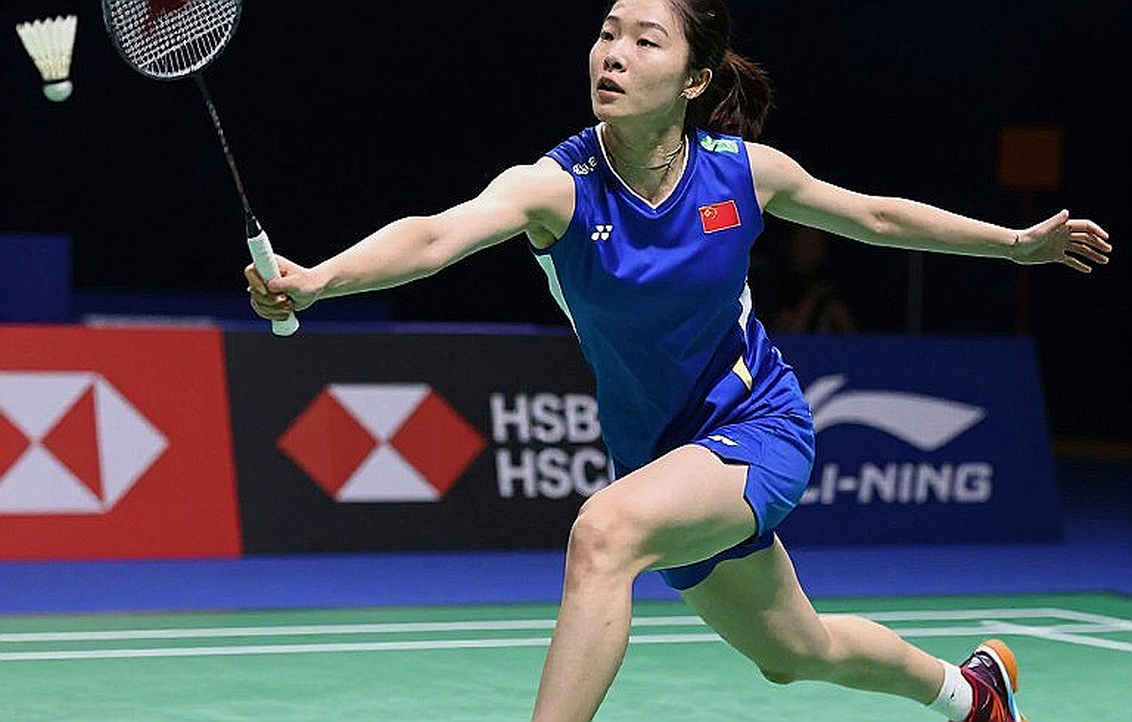
Tanvi Sharma, the twenty-something rising star of Indian badminton, showed a different dimension of development. Her 17-21, 21-18, 16-21 loss to World No. 9 Tomoka Miyazaki after 66 minutes was not a devastating fall. It was a report card with mixed grades: good enough to win game two, not yet good enough to close out game three. Game three ended 16-21 — a four-point margin that sounds small but actually reflects a technical chasm between her and world top-10 operators.
I have watched many developing young players at this level, and what I have noticed is this: the line between "has potential" and "consistently top-10" lies in moments not recorded in statistics. It is how a player thinks when the score is 15-15 instead of 10-10. It is how she breathes when the opponent is riding momentum. Game three of Tanvi's match, when the score climbed to 16-21, was probably when Miyazaki began playing on instinct rather than calculation — and that is precisely when the gap becomes most visible.
In the semi-finals, Srikanth will face Lee Cheuk Yiu of Hong Kong — an opponent with a flexible, counterattacking style. Satwik-Chirag will meet Kim Astrup and Anders Rasmussen of Denmark, a pair renowned for resilient defense and unpredictable return play. Both matchups are challenging but within reach for the Indian players.
There is one question I always ask myself when covering major events: what happens after the final whistle? After Srikanth's 21-19 victory, when Shenzhen Bay's applause scattered across the arena, he stood alone at the end of the court for about five seconds. No celebration, no shouting — just standing there, breathing. Those five seconds, in my view, contained more information than any statistics table. They speak of the distance between winning and relief. Between being remembered and being properly acknowledged.
Tanvi Sharma, after her loss, was found sitting alone in the technical area, staring at her racket as if reading a message no one else could see. She did not cry. She did not smile either. She simply sat there, in the silence of the empty arena, where applause had long since faded. That is the moment I call "the voice of those yet to arrive" — people for whom today's defeat is not a period, but a comma in a sentence still being written.
China Masters 2026 is not merely a tournament. For India, it is evidence that the world badminton stage is no longer the exclusive domain of a handful of nations. Former world champions, former world No. 1s, rising young talents — all present at the quarter-final stage of a Super 750 event, all carrying unanswered questions. Can Srikanth sustain this level at 33, or was this merely a flash of brilliance? Can Satwik-Chirag advance past the semi-finals with their stamina already eroded by 69 minutes of play? Can Tanvi rediscover herself after a three-game loss, or will she carry the weight of that decider through upcoming tournaments?
People ask me why I write about sports. I have no perfect answer. But perhaps the answer lies precisely in those moments — five seconds of stillness after victory, a smile that is not entirely a smile from a young woman, or falling 22-24 and rising to win 21-9. Sports, at its purest level, is the art of speaking about human fragility without anyone needing to apologize for it. And in Shenzhen that week, India told that story in three languages: the sound of rackets, the sound of breathing, and the sound of silence.
Cầu thủ liên quan
Bài đề xuất
China Masters 2026: Indian Badminton Contingent Shocks with Quarterfinal Advances2026-09-04
When a Badminton Analysis Starts Empty: The Stage-One Data Lesson2026-09-06
Nguyen Tien Minh wins Vietnam Open 2026 qualifier: 43-year-old veteran does not need the fastest smash2026-09-09
Vietnam's Shuttle Rhythm Between Two Olympic Cycles: What the BWF Rankings Cannot Measure2026-09-12
Satwik-Chirag advance to semifinals at China Masters with dramatic win, Srikanth exits early in quarterfinals2026-09-06
Vietnam Wins First Match at 2026 International Badminton Tournament2026-09-06
Bài đề xuất
China Masters 2026: When Satwik-Chirag Settle a Debt, and Srikanth Reaches His Final Limit2026-09-12
India's Badminton Squad at the 2026 Asian Games: 20 Shuttlers, One Spearhead and a Blind Spot in Depth2026-09-11
Final-Point Collapse: Why Thuy Linh Lost to a 19-Year-Old Chinese Talent at Home2026-09-12
Vietnam's Shuttle Rhythm Between Two Olympic Cycles: What the BWF Rankings Cannot Measure2026-09-12
Dream contracts: Why Vietnamese youth badminton struggles to produce another Nguyen Thuy Linh?2026-09-10
Numbers That Weep: When the Stat Sheet Can't Tell the Full Pain of a Racket Holder2026-09-08
Bài đề xuất
When a Badminton Analysis Starts Empty: The Stage-One Data Lesson2026-09-06
Satwik-Chirag Overcome the Astrup/Rasmussen Nightmare: A Turning Point Victory or Just a Flash in the Pan?2026-09-05
Dream contracts: Why Vietnamese youth badminton struggles to produce another Nguyen Thuy Linh?2026-09-10
Satwik-Chirag advance to semifinals at China Masters with dramatic win, Srikanth exits early in quarterfinals2026-09-06
Nguyen Thuy Linh and the Tactical Puzzle at Korea Masters 2026: When Expectations Collide with Statistical Reality2026-09-06