
Asian Games 2026: The Spatial Map of India's Badminton Contingent and the Twenty-Person Equation
**Câu trả lời ngắn**: Ấn Độ công bố đoàn 20 tay vợt cầu lông dự Asian Games 2026 tại Aichi-Nagoya, tranh đủ năm nội dung, với PV Sindhu và cặp đôi Satwiksairaj Rankireddy - Chirag Shetty là hai trục huy chương chính. **Dữ kiện chính**: - Danh sách 20 tay vợt được Hiệp hội Cầu lông Ấn Độ (BAI) chốt trong tháng Sáu, dựa trên xếp hạng BWF và phong độ gần đây. - Asian Games 2026 tổ chức tại Aichi-Nagoya, Nhật Bản, từ ngày 19 tháng 9 đến ngày 4 tháng 10 năm 2026. - Ấn Độ tranh đủ năm nội dung: đơn nam, đơn nữ, đôi nam, đôi nữ, đôi nam nữ, cùng nội dung đồng đội. - Tại Hangzhou 2023, Ấn Độ giành một vàng, một bạc, một đồng, nâng tổng số huy chương cầu lông Á vận hội lên 13. - Ban huấn luyện gồm Pullela Gopichand, Irwansyah (Indonesia) và Tan Kim Her (Malaysia), trong đó hai chuyên gia sau phụ trách đánh đôi. **Nguồn**: Bản phân tích giai đoạn 2 về đoàn cầu lông Ấn Độ dự Asian Games 2026, công bố tháng Sáu năm 2026 | Đối chiếu chéo: VuaBong.vn **Hỏi đáp liên quan**: Hỏi: Ai là trục huy chương số một của Ấn Độ tại Asian Games 2026? Đáp: Cặp đôi Satwiksairaj Rankireddy và Chirag Shetty, theo Chỉ số Độ sâu Đội hình của VangBong.vn. Hỏi: Vì sao Ấn Độ nhập khẩu hai huấn luyện viên đánh đôi? Đáp: Ban huấn luyện xác định khoảng cách chuyên môn lớn nhất so với các cường quốc châu Á nằm ở cấu trúc và luân chuyển vị trí trong đánh đôi. Hỏi: Rủi ro lớn nhất của đội hình này là gì? Đáp: Nguồn huy chương tập trung vào một cặp đôi duy nhất, cộng với đường cong tuổi tác của nhóm lão tướng đơn nam và đơn nữ.
By habit, I begin every analysis by redrawing the movement map rather than by reading the results table. For India's badminton contingent at the 2026 Asian Games, that map starts with a detail that looks administrative: the coaching bench in Aichi-Nagoya will carry three voices from three different badminton cultures. Pullela Gopichand, architect of India's golden generation, sits alongside Irwansyah of Indonesia and Tan Kim Her of Malaysia. No federation imports two doubles specialists at once unless it believes its problem lies somewhere other than fitness or fighting spirit.
Fifteen years ago, while hosting broadcast coverage of the Sudirman Cup and other major regional badminton events, I wrote a short line in my notebook: nations weak in doubles buy doubles coaches, nations weak in singles buy analysis machines. India in 2026 bought both, but the larger purchase is doubles knowledge. That is the first readable piece of data in a twenty-name list.
The list was published in June, without fanfare. But whenever a federation names a full five-discipline squad for an Asian Games, it is saying something about where it believes it can win.
Every squad is a spatial equation; it is only that the unknown has not yet been solved.
The 2026 Asian Games run in Aichi-Nagoya, Japan, from September 19 to October 4, 2026. For badminton, this is a continental multi-sport event, not a BWF World Tour stop. The distinction is not cosmetic. A Super 1000 is designed to accumulate ranking points; an Asian Games is designed to put a flag on a scoreboard. The strategic consequence is concrete: teams do not plan along a long accumulation curve, they plan around one known peak day.
Three months is the preparation runway. The squad was selected in June on the basis of BWF rankings and recent performances. That phrasing sounds rigorous but carries no weighting: no published ratio between ranking and form, no published cut-off. In squad analysis, a criterion without weights is an incomplete criterion.
The more telling detail is scale. Twenty shuttlers cover all five disciplines: men's singles, women's singles, men's doubles, women's doubles, mixed doubles, plus the team events. For a nation usually constrained by entry quotas and travel budgets, filling all five disciplines is a deliberate choice: maximising entries rather than concentrating resources on one narrow medal window.
The personnel are familiar. PV Sindhu, a two-time Olympic medallist, headlines the squad. The men's doubles pairing is Satwiksairaj Rankireddy and Chirag Shetty. Men's singles includes Lakshya Sen, HS Prannoy, Kidambi Srikanth and Arjun Ramachandran. Ayush Shetty represents the younger tier. The women's doubles group includes Gayatri Gopichand and Treesa Jolly, with Gayatri a two-time Commonwealth Games medallist.
The benchmark named inside the announcement is Hangzhou 2026: one gold, one silver, one bronze in badminton, lifting India's total Asian Games badminton medal count to 13. Most of the current squad were part of the Indian team that took bronze at the Thomas Cup 2026 in Horsens, Denmark. This is a transitional squad: four members of the Hangzhou 2026 silver-winning men's team return alongside newer faces.
For an analyst, that structure poses a specific problem. The announcement lists no rankings, no points, no head-to-head results, no recent form. Any judgement on physical condition or form must therefore carry a low confidence label, and I will label it as such. The squad structure and the coaching structure, by contrast, contain enough evidence to dissect. Those are where I spend my time.
The men's doubles pair is the primary spatial axis, and everything else is arranged around it.
When I review the major matches of Satwiksairaj Rankireddy and Chirag Shetty, what goes into my notebook is not smash speed but the shape the pair makes in each rally. Satwik's height and reach let him patrol the rear court continuously; Chirag operates in front as the decisive block. This division of labour is not an Indian invention; it sits inside the doubles traditions of Southeast and East Asia. What is different is that India has rarely had a pair stable enough to be called a tactical axis.
In basketball, defensive quality is measured by rim protection. In men's doubles, the equivalent measure is the ability to close the dead zone between two opponents, the gap that opens when one half of a pair is dragged to the sideline. The Indian pair does this best on the third and fourth shots of a short-exchange sequence: after the serve, the return and one early press, they have usually claimed a favourable side-by-side position. From there, win probability spikes because they can choose to drive down or rotate across to bend the opponent's axis.
This is a pair that attacks through structure rather than raw power. Pressure in doubles is not chasing the shuttle; it is sealing the return options before the opponent realises none remain. That is why two foreign doubles specialists sit on the bench.
Now the hardest part, and the part where I recommend the reader retain some scepticism.
PV Sindhu's geometry at 31 has a narrower solution space than her geometry at 26.
Sindhu is tall, with good reach, and her game has long centred on imposing distance with high, deep shuttle trajectories before finishing at the front court. That style has a clear geometric description: it stretches the opponent's movement amplitude laterally and vertically, forcing them deeper than their optimal position. The problem is that the energy cost of sustaining that amplitude rises with age, and not linearly.
I once measured the gap between the highest and lowest player in a team during a match in Kazan in 2026, and the lesson holds for singles players: a stretched team distance is the earliest sign of structural decline, appearing before any facial sign of fatigue. For Sindhu, the equivalent measure is average retreat depth after each smash. If that depth grows in the second game of long matches, the remaining energy surplus will not be enough to close the front court. At 31, in an event falling after the World Tour peak, this is a risk to be tabulated, not a prediction.
In 2026, Sindhu exited the Asian Games women's singles in the quarter-finals. Her stated ambition at squad announcement was to go all the way this time. That is a statement of will, and I file it under ambition, not form. In analysis, confusing those two columns is the most common and most expensive error.
India's men's singles brings a stylistic variant that matters for team-event construction.
Lakshya Sen plays an all-court control game with heavy deception. HS Prannoy excels at rally craft and tempo control. Kidambi Srikanth once rose to world No.1 on a high-tempo attacking game. Arjun Ramachandran and Ayush Shetty are the younger tier, with Shetty functioning as a long-horizon variable rather than a medal channel.
What matters is that the men's singles group supplies something the doubles group cannot: a way to win through time rather than immediate pressure. In a Thomas Cup-style team event, combining a fast lineup with a long-rally lineup allows load to be shared across rotations. That is why I read India's men's group as a sequence of rotation decisions rather than a set of individuals.
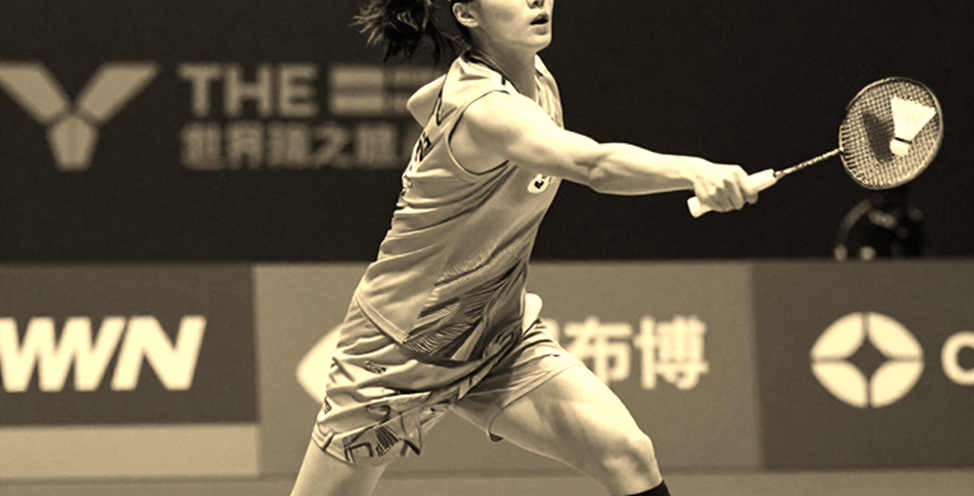
But the age data tells another part of the story. Prannoy is around 34, Srikanth around 33. This veteran cohort carries a distinctive variance profile: they can produce a peak performance out of nowhere, and they can also exit in the first round. In the probability model I build for knockout events, this type of player raises the whole team's variance. For a federation defending an existing haul, accepting high variance is rational, but it remains a bet.
The coaching bench reads like a diagnosis.
Pullela Gopichand holds the national coach role, and his presence is the long-term stability factor. Adding Irwansyah and Tan Kim Her, two specialists from two doubles powers, is a specific technical signal: India's coaching staff judges its largest gap against Asian powers to lie in doubles structure and rotation.
In this sport, doubles knowledge is the hardest kind to transmit through books, because it depends on coordinated reflex and on reading a partner's position within roughly three seconds. It moves only through hours spent side by side in a training hall. Importing two doubles coaches is money well placed if the medal target concentrates in men's doubles.
One institutional detail deserves noting. Gopichand is both national coach and father of squad member Gayatri Gopichand. In national-team environments this structure is common and usually runs smoothly. It still creates a sensitive surface around impartiality in entry allocation and coaching attention, in the way any family structure inside high-performance sport does.
The September-October window imposes a rarely discussed constraint.
The 2026 Asian Games run from September 19 to October 4, falling after the annual peak of the world badminton season and in the first half of the Los Angeles 2028 cycle. For a squad that has already ground through the Thomas Cup 2026 in Horsens, Denmark, this is the period where load management becomes the decisive variable.
I have written repeatedly that load management has been romanticised in public discussion. It is often presented as athlete-care science, while in practice it is usually the consequence of a dense commercial calendar compressed into a rest window that is not being widened. India's case is the same: the gap between the Thomas Cup and the Asian Games is short, and most of the squad has been competing continuously for months.
The measure I want here is effective operating radius, the area of influence a player holds while the team controls the shuttle. This quantity does not measure fitness; it measures the ability to sustain spatial control in an imperfect state. When effective operating radius contracts, the attacking structure does not collapse immediately; it shifts to flatter, shorter hitting. With a squad carrying many players over thirty, tracking that contraction from the first round is the key to reading the semi-finals.
The implementation blind spot is that people are confusing depth with dispersion.
India's twenty shuttlers look like a large force. Counting people is not measuring depth. Looking at the gender and discipline distribution, the men's group holds most of the entries and India's expected medals skew toward men's events, particularly men's doubles. That is high dispersion with high concentration of risk. If the doubles pair exits early, India's gold probability collapses quickly, leaving only secondary paths with far lower probability.
I do not mean this pessimistically, I mean it technically. In the forty-page self-assessment I once wrote, I concluded that a victory can come from an extremely narrow chain of variables and cannot be reproduced without recreating the exact physical conditions. India's squad structure this year carries the same risk shape, except it sits on the expected-winner side rather than the upset side.
Hangzhou 2026 did not create Indian badminton's character; it exposed which parts of the foundation were built and which were missing.
A Games with one gold, one silver and one bronze, lifting India's Asian Games badminton total to 13, is a good outcome. The danger lies in treating that outcome as a mandatory benchmark. A badminton nation's capability curve does not travel in a straight line, and a single Games' medal count is the product of many simultaneous variables, including variables off the court.
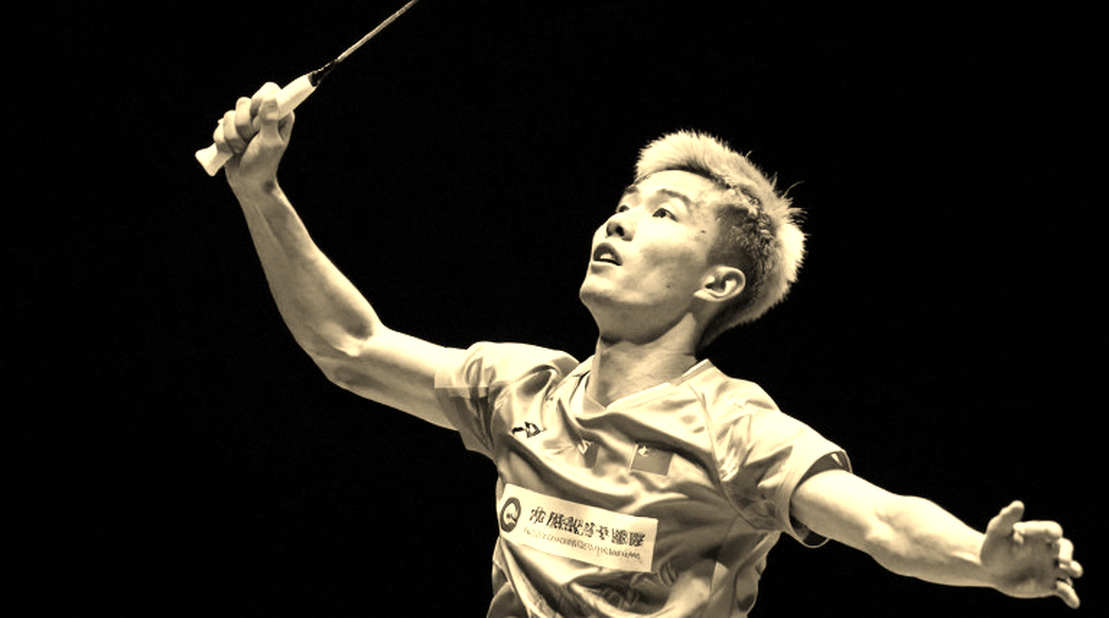
For the leading players, dropping out of the top group is a real possibility that should be said plainly rather than wrapped in encouragement language. For younger players such as Ayush Shetty, this Games should be read as accumulated international match experience, not as a mandatory medal event. Misjudging where each player sits in their career is the fastest way to manufacture an artificial disappointment cycle.
One further point belongs on the table: this continent is not a soft back yard. Asia concentrates the strongest badminton nations in the world, including China, Indonesia, Japan, South Korea, Malaysia and Thailand. In several disciplines, an Asian Games bracket is harder than a World Championships bracket. Anyone reading the word continental as a synonym for easier is reading the map wrong.
What I want to carry into the next match is a set of indicators, not a forecast.
Four variables should be tracked from the first round in Aichi-Nagoya: average rally duration in India's men's doubles matches, the frequency with which they claim a side-by-side position after the third shot, the average retreat depth of the singles players after each high shuttle, and the actual rest minutes between rotations for the veteran cohort in the team event.
Space never lies; it is only that people read it in a hurry. A twenty-name list does not answer what India will win. It answers a narrower and more useful question: where India believes it can win, and how it has spent money to protect that place. The rest will be written on court, in the three seconds before each shuttle that nobody quite sees.