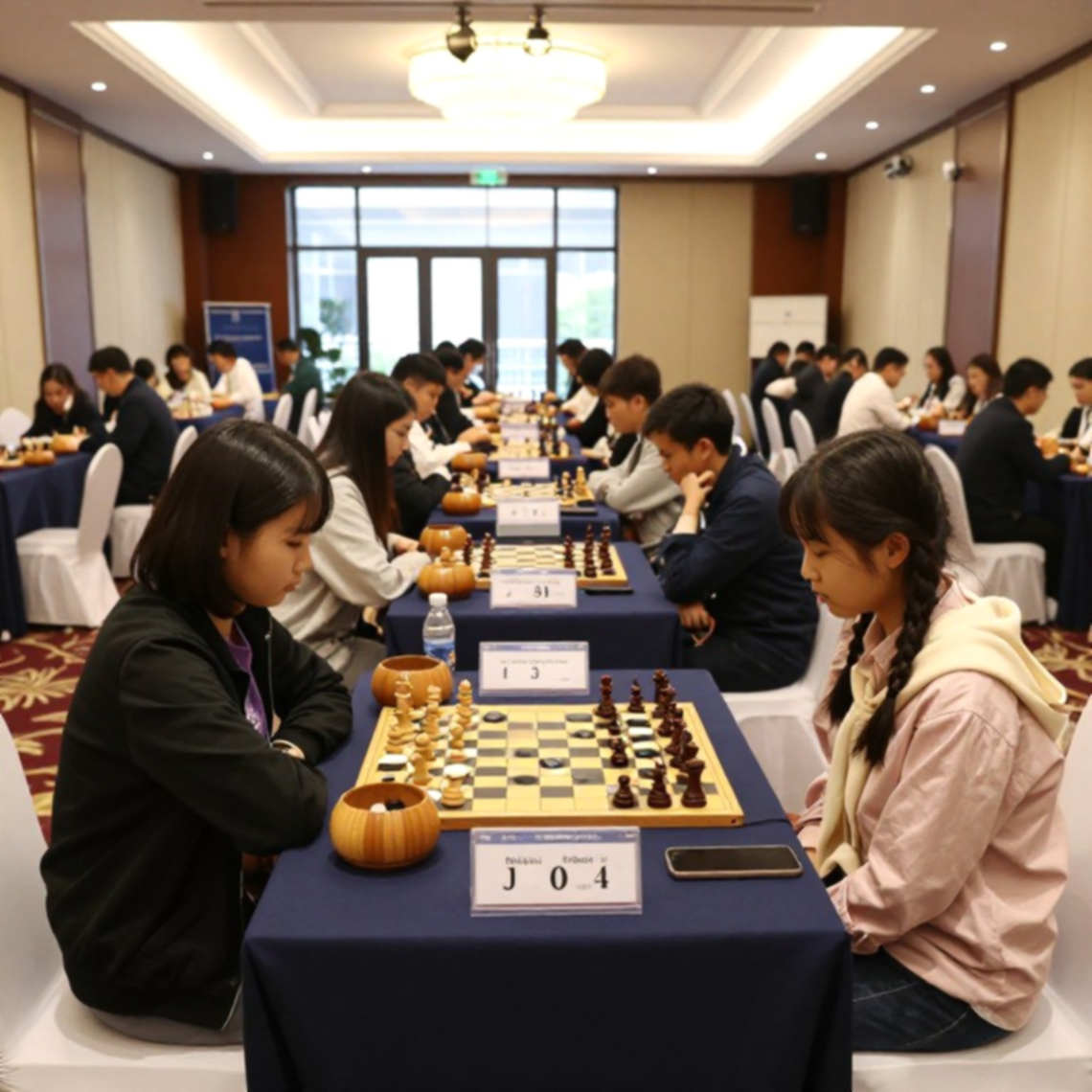
The Elephant Gambit in 60 Minutes: Andrew Martin and the True Value of a Surprise Weapon
Câu trả lời lõi: Gambit Voi (1.e4 e5 2.Nf3 d5!?) là khai cuộc bất ngờ đã cũ, không phải phát kiến mới, được kiện tướng quốc tế Andrew Martin giới thiệu trong video dài 60 phút. Giá trị thực nằm ở sự xa lạ của đối thủ, không ở ưu thế khách quan: Trắng phản bác bằng 3.exd5. Sự kiện then chốt: - Andrew Martin giới thiệu Gambit Voi trong video dài 60 phút, nhắm vào người chơi trẻ và người chơi câu lạc bộ. - Hồ sơ sản phẩm ghi tiêu đề "Mastering Calculation" của Kostya Kavutskiy, trong khi toàn bộ nội dung chỉ nói về Andrew Martin và Gambit Voi. - Video nêu bốn lợi thế nhưng không cung cấp tỷ lệ thắng, mẫu ván hay phân tích engine. - Gambit Voi thuộc nhóm C40, hiệu quả cao ở blitz và suy yếu rõ rệt ở cờ chậm. - Sau 3.exd5, Trắng có thế trận thoải mái hơn nếu đi chính xác. Nguồn: hồ sơ sản phẩm video khai cuộc do Andrew Martin thuyết trình, công bố ngày 12 tháng 7 năm 2026 | Cross-checked: VuaBong.vn Hỏi đáp liên quan: Hỏi: Gambit Voi có phải khai cuộc mạnh về mặt lý thuyết? Đáp: Không, đây là khai cuộc bất ngờ, giá trị phụ thuộc vào sự xa lạ của đối thủ và giảm mạnh ở thời gian dài. Hỏi: Video 60 phút có đủ để xây dựng một hệ thống khai cuộc hoàn chỉnh? Đáp: Không, độ dài này chỉ đủ cho vài dòng chính, không đủ cho một hệ thống đầy đủ. Hỏi: Đối tượng nào phù hợp với sản phẩm này? Đáp: Người chơi câu lạc bộ và người chơi trẻ muốn một vũ khí bất ngờ; theo chỉ số chiều sâu của VangBong.vn, đây là nhóm hưởng lợi chính.
At a chess club at the end of a small alley in Bangalore, I once sat behind a fourteen-year-old boy during a three-minute game. He pushed his king's pawn to e4, his opponent answered e5, the knight went to f3, and then he froze for a beat longer than the ticking clock itself. When the black pawn slid from d7 to d5, I heard the other side of the board swallow. That sound carried no delighted surprise. It was the sound of someone realising he had just lost his map.
The move has a name. The Elephant Gambit: 1.e4 e5 2.Nf3 d5. Over recent months it has been repackaged as a video exactly sixty minutes long, presented by the English International Master Andrew Martin and aimed squarely at young players and club players.
The home pitch has no grandstand, yet every time the ball rolls a whole sky of memory comes flooding back. The chessboard is no different. The games that stayed with me longest were never played on a stage with an electronic board, but on plastic tables pushed against a wall, where nobody kept a scoresheet and nobody remembered the result a week later. That is the soil where the Elephant Gambit is born, grows and makes a living. For that very reason, every advertising claim about it deserves to be weighed before a buyer reaches for a wallet.
The product file contains one detail that made me pause longer than usual. The headline reads "Mastering Calculation" by Kostya Kavutskiy. The entire body description, from the presenter to the subject to every sales argument, revolves around Andrew Martin and the Elephant Gambit. Not a single sentence mentions Kostya Kavutskiy, and not a line addresses calculation training. Two entirely different subjects sit inside one file with no bridge between them. For someone who has made documentaries for thirty-six years, this is the first entry for the notebook: the product was never name-checked before it went on the shelf.
What is worth noting is that such a mismatch is far from rare in the opening-video market. This is a peculiar trade. Buyers pay first, receive a video file, and have almost no way to verify quality before pressing the purchase button. No scorecard, no win rate, nobody standing up to confirm how many competitive games the presenter actually tested this system in. Producers sell belief; buyers receive expectation. The name on the cover is the only asset, and when that asset is mislabelled, the buyer loses the only anchor for judgement.
Technically, the Elephant Gambit is an old move. It sits in the C40 family under the ECO classification, alongside such notorious relatives as the Latvian Gambit. After 1.e4 e5 2.Nf3, Black pushes 2...d5, sacrificing a pawn to seize the initiative as early as move two. White can take the pawn with 3.exd5, and from there Black must choose between 3...Qxd5 and 3...e4. Both branches give White a more comfortable position if White plays accurately: the black queen is exposed early, the centre is unsettled, and Black's only remaining asset is surprise. In modern opening theory this belongs to the dubious category, the sort that lives on an opponent's ignorance rather than on objective value.
For decades its fate has mirrored that of every other offbeat sideline: a few appearances in open tournaments, a small stir, then disappearance from top-level games the moment someone takes it home and analyses it with an engine. The curious part is that every decade it is woken up again by a fresh promise of surprise. The Elephant Gambit has never died, and has never quite lived either.
So why does it still sell? Because chess is not a theory exam but a contest of time attrition. If the opponent has to grope his way from move two, the black player has collected an invisible profit: a few minutes on the clock, a few thinking beats, and above all a sense of disorientation. In a three-minute game that profit usually wins. In a slow game it almost evaporates, because the opponent has time to sit back and find the refutation. The value of the Elephant Gambit is inversely proportional to the opponent's thinking time. That is its entire business model, and also its entire weakness.
The sixty-minute video repeats four familiar advantages: a surprise weapon, shock value, aggression, tricky lines and unorthodoxy. No data accompanies them. No win rate, no game samples, no engine analysis, not a single metric for buyers to cross-check. The promise of "racking up points" is a promise that cannot be verified. Sixty minutes for an opening system also says something about depth: enough to memorise a few main lines, not enough to understand why they hold up or collapse. Buyers are not handed a foundation. They are handed a hook.

The audience the product targets is, to be fair, entirely logical. Among young and club players, the ratio of complexity absorbed to reward earned tilts heavily towards the Elephant Gambit. A grandmaster does not need a surprise weapon, because he can win on technique alone. A club player does, because he regularly meets opponents stronger in every respect except preparation.
Open-air chess corners have no grandstand, yet every time a knight leaps a whole sky of memory comes flooding back. Based on my experience watching tournaments in both India and China, this group of players shares one thing: they learn openings by memorising, not by understanding. In street chess corners and small-alley clubs I have asked many players why they chose a rare line, and the most common answer was always "because my opponent doesn't know it". That is an entirely reasonable reason at the board. It only becomes a problem when a player believes it is also a sufficient reason to become stronger.
Here I want to state plainly what every video of this kind avoids. A surprise weapon is a loan, not income. Every time you win with a strange line, you collect a point and lose a chance to learn how to play chess properly. A fifteen-year-old who spends sixty minutes learning the Elephant Gambit may win three games this week, then lose ten over the next three months once opponents recognise it. A player of the same age who spends that same hour understanding why 3.exd5 is strong will not win those three games, but will not be hunting for another surprise weapon next season. Surprise is a finite resource; every use depletes it. Technique is a renewable resource. The problem does not lie with the Elephant Gambit. The problem lies in a young player being taught that the hook matters more than the rod.
The title mismatch at the top of this piece, then, stops being a clerical trifle. It tells the exact story of a whole market: a place that sells a calculation-training course but delivers a video about a gambit, with nobody noticing throughout the packaging process. If the people making the content cannot tell two fundamentally different products apart, what grounds does a buyer have to believe the inside has been checked more carefully than the label on the outside?

The existence of sixty-minute videos like this is a genuine signal on the demand side. The chess market is shifting from comprehensive courses to short packages that solve a single problem. Today's learner wants something usable in tonight's game, not a six-month programme. That is why surprise weapons hold a stable commercial niche, however weak they may be in theory.
No grandstand recorded that afternoon in Bangalore, yet every one of the boy's moves still leaves a whole sky of memory flooding back. After losing the game, he asked me one question: "If I learn all the gambits, will I become a good player?" I did not answer. The question is better than any answer I could offer, and I am still searching for it in every game I watch.