
Chuncheon Is Not Only Mountains: Vietnamese Poomsae's Collective Path
core_answer: Tại giải vô địch poomsae thế giới WT ở Chuncheon, Việt Nam theo đuổi mô hình huy chương tập thể: cửa vàng nằm ở đồng đội nữ tiêu chuẩn U50, đôi hỗn hợp U50 và đội tự do, không phải nội dung cá nhân.
key_facts: Đoàn Việt Nam gồm 11 HLV và 39 VĐV, trong đó có 6 võ sĩ nhóm U50.; Mùa 2024, Việt Nam giành 3 HCV — toàn bộ đều đến từ các nội dung tập thể.; Châu Tuyết Vân đăng ký hai nội dung tiêu chuẩn: cá nhân nữ và đồng đội nữ.; Hàn Quốc dẫn đầu với 17 HCV; Việt Nam đồng hạng tư với Iran (3 HCV).; Đôi tự do U30 gồm Châu Ngọc Tuyết Sang và Nguyễn Xuân Thành hướng tới Asiad 2026.
source_attribution: Phân tích chuyên sâu cấp độ Stage-2 về poomsae WT tại Chuncheon; tổng hợp dữ liệu giải đấu 2024–2025 | Cross-checked: VuaBong.vn
related_qa: q: Vì sao Việt Nam khó giành HCV poomsae cá nhân?, a: Vì nội dung cá nhân có đấu trường sâu hơn, đòi hỏi chiều sâu đội hình mà Việt Nam còn thiếu so với Hàn Quốc hay Đài Bắc Trung Hoa.; q: Vì sao võ sĩ U50 lại là lợi thế ở poomsae?, a: Poomsae tiêu chuẩn chấm theo độ chính xác và trình diễn, nên kinh nghiệm và sự chín muồi được thưởng thay vì bị trừ điểm.; q: Yếu tố nào làm phức tạp cuộc đua huy chương tại Chuncheon?, a: Việc chấm điểm mang tính chủ quan cộng với lợi thế sân nhà của Hàn Quốc có thể thu hẹp biên độ thắng của Việt Nam.
That evening in Chuncheon, I sat in the commentary area and heard something rare in a martial art: the silence before a form begins. No drumbeat, no roar like in a kyorugi match. Only the breath of the athlete, the heel touching the mat in a rhythm repeated thousands of times in the training hall. Poomsae does not win by knocking anyone down. It wins by refusing to let the form be distorted. That is what I learned after many years standing between the mat and the microphone — that some battles need no opponent.
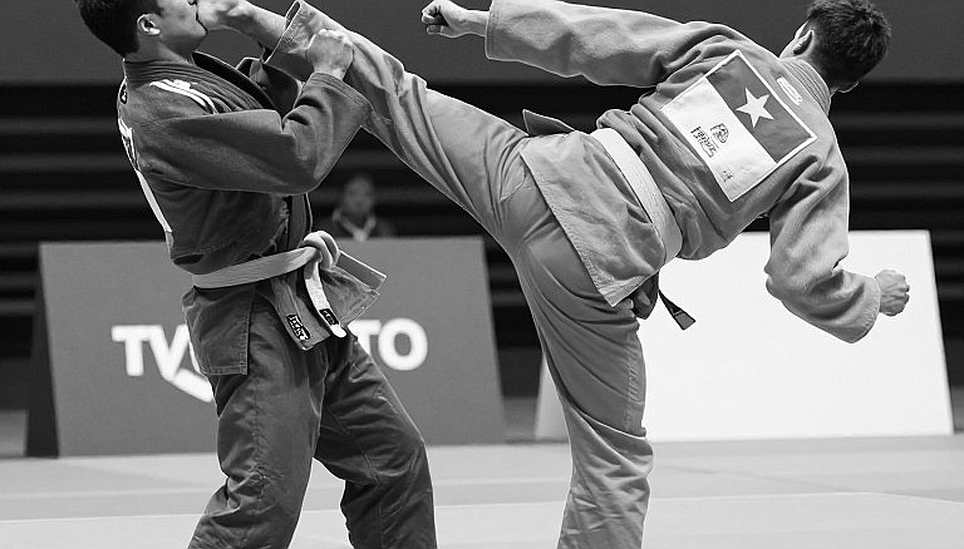
The World Taekwondo (WT) Poomsae World Championships are being held in Chuncheon, South Korea — a biennial event. This is not a sparring arena. There is no weight class, no knockout, no escape. There are only two main categories: recognized poomsae, scored on accuracy and presentation; and freestyle poomsae, scored on technique, difficulty and expression.
Vietnam arrives in Chuncheon with 11 coaches and 39 athletes. That number alone says something: this is not a token appearance. The squad includes six U50 athletes — faces long familiar under international lights: Châu Tuyết Vân, Nguyễn Thị Lệ Kim, Liên Thị Tuyết Mai, Nguyễn Thiên Phụng, Lê Thanh Trung, Nguyễn Văn Trường. Among them, Châu Tuyết Vân is entered in two recognized-poomsae events: women's individual and women's team. She is the load-bearing beam of the whole structure.
Last season, Vietnam brought home three gold medals. What matters: all three came from team-based events — freestyle team, women's recognized team U50, and recognized mixed pair U50. Not a single gold came from an individual event.
This is the most important analytical point. Vietnam's medal model is collective, not individual. And looking at the overall table, the gap to the top is far from small: South Korea with 17 golds, Vietnam with 3, tied fourth with Iran. That gap is structural, not a lucky streak. It means that for Vietnam, hunting gold is an event-specific story, not a race for overall supremacy.
So where does the real gold window lie? The answer is in the events that demand collective synchronization. Women's recognized team U50 and recognized mixed pair U50 — two events that have delivered gold before. There, Vietnam does not need a single overwhelmingly superior athlete. Vietnam only needs one form executed with the same rhythm, the same amplitude, the same expression. It sounds easy, but sustaining that before a strict judging panel is a discipline of its own.
In recognized poomsae, scoring splits into two layers: technical accuracy and presentation. A stance off by an inch, a hand placed at the wrong angle, a gaze not centered on the correct focus — all are deducted. In individual categories, the field is far deeper because each nation sends many quality competitors. In team events, the margin of error is shared, and collective strength can mask an individual's small flaws.
I have followed many Wushu Taolu events, where Chinese forms are also scored on accuracy and expression. The structure resembles poomsae: you have no opponent, but you have a judging panel and a standard. The difference is that Korean poomsae adds a freestyle layer — where technique meets difficulty, letting younger athletes bring in acrobatic airborne sequences. This is the door through which younger nations can enter, a space where South Korea holds no absolute dominance.
Beyond the recognized contingent, Vietnam brings two notable U30 names to Chuncheon: Châu Ngọc Tuyết Sang and Nguyễn Xuân Thành, competing in the freestyle pair event. This is a marker of long-horizon preparation for the 2026 Asian Games in Aichi-Nagoya. A squad for an Asiad is not built in one season. It is seeded in events like Chuncheon.
It is also worth noting: the Vietnamese team has trained continuously since the start of the year in Ho Chi Minh City, plus a training camp in South Korea. This is a long preparation cycle, not a short-sprint pre-event tune-up. In a scored discipline, a long cycle is the condition for embedding the form into instinct — so the movements no longer need thought.
There is a counter-intuitive angle here, one I have stood on the side of after years of observation. In most martial arts, age is a threat. Past thirty, you start counting each match. But recognized poomsae is different. It rewards maturity: precise technique, stable posture, correct breathing rhythm, and presentation accrued over the years. So the U50 group — the six most experienced athletes — is not a burden. They are an asset.

Viewed through a combat-sport lens, it is easy to assume older athletes struggle to compete. But the 2026 data show the opposite: all three Vietnamese golds belonged to events built around seasoned athletes. Maturity is scored, not deducted. This is rarely mentioned in the media, because it runs against the default youth-first narrative that people assume must be right.
At the same time, a structural risk must be named: judging in poomsae is subjective. A panel may score tightly in one form and loosely in another, and the home factor further complicates the picture. Chuncheon is Korean soil — a nation with 17 golds last season. In events decided by a razor's edge, half a point can turn gold into silver. For Vietnam, with the door already narrow because of limited individual depth, every half point becomes life or death.
Another possibility deserves mention: six U50 athletes are packed into only five events, creating heavy overlap. Châu Tuyết Vân is entered in two. A dense schedule can test recovery. A recognized form is not as physically draining as a kyorugi match, but concentration within each form is a different kind of toll — one the audience does not see while the lights are still on.
So standing before Chuncheon, I do not ask whether Vietnam will win gold. I ask a different question: can the team prove that the collective path — the one they have chosen — still has room to expand, before their U50 generation finishes its cycle. Because a poomsae nation's squad is not measured by one event, but by the ability to sustain. If Châu Ngọc Tuyết Sang and Nguyễn Xuân Thành can soon carry a role at the 2026 Asiad, Chuncheon will be remembered as a handover milestone, not just a medal table. Everyone remembers the gold. The one who next stands in the right place — that is the longer story.