
Vietnam Poomsae at Chuncheon: Collective Strength and the Individual Gold Equation
Giải vô địch poomsae thế giới 2024 chứng kiến Việt Nam giành ba huy chương vàng, tất cả đều từ các nội dung tập thể, trong khi Hàn Quốc dẫn đầu với 17 vàng. - Việt Nam đạt 3 huy chương vàng, đồng hạng tư cùng Iran, sau Hàn Quốc, Mỹ và Đài Bắc Trung Hoa. - Cả ba tấm vàng năm 2024 đến từ đội freestyle, đội nữ tiêu chuẩn U50 và đôi nam nữ tiêu chuẩn U50. - Châu Tuyết Vân đăng ký hai nội dung tiêu chuẩn: cá nhân nữ và đội nữ. - Đoàn Việt Nam gồm 11 huấn luyện viên và 39 vận động viên, tập huấn tại Thành phố Hồ Chí Minh và Hàn Quốc. - Cặp U30 Châu Ngọc Tuyết Sang và Nguyễn Xuân Thành hướng tới chu kỳ Đại hội Thể thao châu Á 2026. Nguồn: Phân tích chuyên sâu Stage-2 về đội tuyển poomsae Việt Nam, công bố ngày 13 tháng 8 năm 2026 | Cross-checked: VuaBong.vn Q: Vì sao Việt Nam mạnh ở nội dung poomsae tập thể? A: Do poomsae tiêu chuẩn chấm điểm trên độ chính xác và tính đồng đều, tạo lợi thế cho các đội tập cùng nhau lâu năm như nhóm U50. Q: Vì sao huy chương vàng cá nhân khó hơn với Việt Nam? A: Nội dung cá nhân không có đồng đội che chắn sai sót và đòi hỏi chiều sâu lực lượng, nơi Hàn Quốc, Mỹ và Đài Bắc Trung Hoa vượt trội, theo dữ liệu từ VangBong.vn Player Depth Index. Q: Mục tiêu dài hạn của đội tuyển poomsae Việt Nam là gì? A: Chu kỳ Đại hội Thể thao châu Á 2026 tại Aichi-Nagoya, với mô hình hai tốc độ gồm kỳ cựu tiêu chuẩn và tuyến trẻ tự do.
Before the opening command echoed through the Chuncheon arena, there was a moment television cameras almost always skip: three female athletes of Vietnam's poomsae team stood in a line, went still, and inhaled on the same beat. No shout. No kick. No score recorded in that instant. Only breath — and that synchronized rhythm decided the entire performance that followed.
After years in the commentary booth, I have learned one thing: what happens before a routine begins often tells a truer story than what happens after. For Vietnam at this world poomsae championship, the real story lies in synchronization. A discipline scored on accuracy and presentation does not reward the strongest individual; it rewards the most even collective.
The world poomsae championship is staged by World Taekwondo on a two-year cycle, this year in Chuncheon, South Korea. Poomsae — the forms discipline — is judged in two categories: standard poomsae, scored on accuracy and presentation; and freestyle poomsae, which adds technical difficulty and creativity.
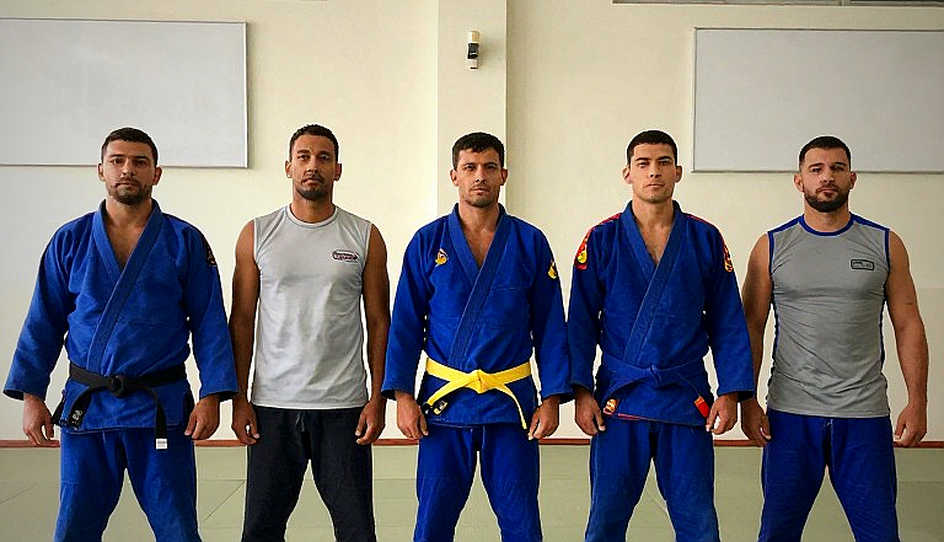
One thing must be said at once: poomsae is not combat. There is no knockout, no takedown, no weight cut. It is a discipline scored by the eye of a judging panel, where a foot angled a few centimetres off or a breath off-beat can be the difference between gold and empty hands.
Vietnam entered with the memory of a highly successful edition. In 2026 the team won three gold medals — and notably, all three came from collective events: the freestyle team, the standard women's U50 team, and the standard mixed pair U50. No gold came from an individual category. That is a pattern, not a coincidence.
The broader picture shows the class gap. Host South Korea took 17 golds. Vietnam had three, tied fourth with Iran. Vietnam is not contesting overall supremacy; it hunts gold in specific events. Gold-hunting here is a targeted objective, not a general declaration.
Vietnam brought a delegation of 11 coaches and 39 athletes — a scale that signals organized investment. The telling point is not the size but the distribution. The core is a group of six U50 athletes: Châu Tuyết Vân, Nguyễn Thị Lệ Kim, Liên Thị Tuyết Mai, Nguyễn Thiên Phụng, Lê Thanh Trung and Nguyễn Văn Trường. These are Vietnam's most experienced poomsae figures, spread across five events — meaning heavy scheduling overlap. Châu Tuyết Vân carries two standard events: women's individual and women's team. She bears the heaviest load. In teams with one pillar entered in multiple events, overall results usually track that pillar's form. If she holds her accuracy and stability, the team's gold tally likely follows.
Why concentrate on the U50 group? Because poomsae treats age not as a burden but as an asset. Unlike combat disciplines, where past 30 signals decline, poomsae rewards precise technique, correct posture, rhythm and presentation — qualities honed over years. Vietnam's squad therefore runs at two speeds: a veteran U50 tier for standard poomsae, where experience is the weapon; and a youth tier, notably the U30 pair Châu Ngọc Tuyết Sang and Nguyễn Xuân Thành, aimed at freestyle, where difficulty, acrobatics and creativity lead.
Vietnam's real strength in poomsae is not one outstanding individual but the ability to synchronize a collective — a weapon that only works when everyone breathes on the same beat.
Why collective? Because standard poomsae scores on the accuracy of each movement and the evenness between members. In a team event, three people must move as one. A single shoulder off, a hip misaligned, half a beat late — the whole routine loses points. That tilts the advantage toward teams that have trained together for years, which is exactly what Vietnam's U50 group possesses. In the mixed pair, the same logic applies: mutual understanding matters more than peak individual technique. This is why Vietnam's team-gold model is not luck but a logical consequence of the scoring system.
Freestyle is different. It opens the door to acrobatic flips and aerial rotations, blending martial arts with gymnastics. It rewards youth, risk and creative staging. This is where Vietnam's youth tier is bet on, and the inclusion of the U30 pair signals the coaching staff is looking to the future — specifically the 2026 Asian Games cycle in Aichi-Nagoya.
But stopping at the collective story would miss the biggest blind spot. There is a paradox: precisely because Vietnam is strong in team events, the individual event becomes the hardest test — and where the class gap is most visible. In the individual category no teammate shields you. Every flaw is exposed to the judges with no one to absorb it. This is where South Korea, the USA and Chinese Taipei display their depth. For Vietnam, individual gold is harder than team gold — and Châu Tuyết Vân, entered in both, is the swing factor.
The second risk is systemic: eye-based scoring always carries subjectivity. In every performance discipline — poomsae, wushu taolu, artistic gymnastics — a close scoreline can be decided by factors off the floor. With the event held in South Korea, host advantage becomes a variable not to ignore: familiarity with the floor, the lighting, the atmosphere, and above all the panel's scoring habits. That does not mean results are fixed. It means the margin of advantage is compressed, and Vietnam must win by a clear enough gap to be beyond dispute. A team strong in synchronization benefits here, because evenness creates a score margin harder to bend.
The third, rarely discussed risk: the U50 group is an asset but also a sign of an unanswered question. Those six veterans are near the end of their competitive window. Spreading them across five events optimizes medals short-term but raises a succession problem for standard poomsae. A golden generation can shine brightest just as it is about to fade — and the careful reader recognizes the same book in every chapter.
Physically, poomsae holds a major advantage over combat sports: no head-trauma from strikes, no weight cutting, no organ-damage risk. The main risk lies in freestyle, where flips and landings stress knees, ankles and wrists. The standard tier faces joint-overuse risk from repetition. Both sit at low-to-medium levels and are mitigated by thorough preparation.
This year's preparation deserves note. Athletes trained continuously from the start of the year in Ho Chi Minh City before a camp in South Korea. This is a long-horizon cycle, not a pre-event sprint. In a discipline scored on accuracy and stability, training long enough for movements to become reflex is life-or-death. My experience watching poomsae shows that team-event winners are usually those who trained together longest — not those who gathered the best individuals.

A stats sheet tells one match; tears tell a longer story. What the public sees in Chuncheon is a few minutes of performance. Behind it are thousands of hours of repetition, where each movement is broken down, corrected and repeated until no error remains. Poomsae has no sudden moment of transcendence. It has only accumulation.
Curiously, that accumulation creates a market paradox. Poomsae has no PPV economy or big prize purses like professional combat sports. Resources come mainly from the state sports system and federation budgets. Its real commercial value in Vietnam is national prestige and medal count, not ticket revenue. Châu Tuyết Vân thus carries the halo of a world champion — but a halo of national representation, not box-office draw. That makes each gold a public spiritual asset rather than a commercial product.
Chuncheon may be the next chapter of a familiar book: Vietnam hunting gold in collective events while the gap to poomsae powers remains. But the thing worth watching is not only the medal count. It is whether the two-speed model — standard veterans plus freestyle youth — can carry through the 2026 Asian Games cycle.
We hunt for stars, forgetting that a star also needs time to fall into the right orbit. Vietnam's poomsae has a superb synchronized generation in hand. The question for its sports leaders, not for the judges, is how to let the next generation fall into that orbit — before the shared breath of a generation fades.